Saturday, August 17, 2013

THE BEER SLUSHIE

Summertime in Japan is so overwhelmingly hot that normally rational people are driven to extremes to escape the miserable heat.  The lack of air conditioning across the country has led to some inventive ways to prevent heatstroke.  There's Gatsby, mentholated "deodorant papers" that leave you feeling a bit cooler, handheld fans, pocket handkerchiefs (for the sweat), elbow gloves to protect against the sun while driving or riding a bicycle, collars made of gel that you can freeze and then wear, and of course, the infamous ice bra
Elbow gloves and umbrellas: it's summer.
This summer, there's a new wave in cooling ingenuity: frozen beer.  Several Japanese brewing companies are trying out a new concept in an attempt to raise sales, adding different fruit juices to their brews, or freezing them and dispensing the beer slushie-style into a cup.  The day after reading about this phenomenon in the WSJ, a friend visiting Fukuoka posted a photo on Facebook with the caption: Drinking a frozen pint of stout. Weird, but the heat has driven me to it. 

Weird it may be, but if Asahi or Kirin could put frozen beer machines next to the Slurpee dispensers in convenience stores around America, they'd make a fortune.  

Friday, August 16, 2013

WHERE THE TRAINS DON'T RUN

When I first moved to Japan, there were times where I would stop and my mind would boggle.  I live in Japan, I'd think.  It was both a dream come true and a surreal improbability that I had ended up here, and so I'd marvel at the ancient temples and the bullet trains and the crowds of men all dressed identically for work in black trousers and white shirts.   

With time, that sense of novelty has worn off to a degree.  It's not that I appreciate Japan any less, or that its wonders and curiosities have diminished.  But you get used to things as life forms a pattern and you become absorbed in your routine.  However, a while back I had an opportunity to revisit that old sense of wonderment when I went to visit another JET who lives way down south in the prefecture, so far down that the trains end about an hour north of his area. 

Rural Japan is another world.  Rice fields and ramshackle houses.  Narrow roads and roadside stands of locally produced eggs and vegetables. No one mans these stands; there is an "honesty box" where people can leave their money and pick up fresh food.  It's quiet and predominantly inhabited by the elderly, as younger generations have fled to the cities for work.  It's a hard life without a lot of creature comforts, where people are as self-sufficient as possible.  It's a bit like stepping back in time.
Rice terrace
CW is one of the many JETs who lives at his school.  While lengthy commutes are fairly common for students and teachers in Japan, some schools are so far away that they have to board students and faculty.  The setup is a bit like sleep away camp, with meals in the cafeteria, a set time for lights out, and patrols of the dormitories by the teachers after curfew. Teachers have restrictions too, like no overnight guests. It's a bit like living in a fishbowl. 

And yet CW has managed to make a pretty good life for himself.  He's sporty and helps out with several school teams.  His school is renowned for its kendo team; they train the best in the prefecture.  However, the focus on athletics means that other things slip through the cracks, like academics.  Students focus on extracurriculars instead of classes, knowing that no matter how poorly they do, they'll be moved on to the next grade level.  There's also a fair bit of teenage rebellion, with students sneaking out at night to buy cigarettes from nearby vending machines, and a few runaways trying to get home.
Take a ride on the river
The village where the school is located is incredibly wealthy, owning land that is leased to one of the large malls to the north, as well as several dams, each of which provides power to an entire prefecture.  Logging is also prevalent in the area, providing a hefty source of revenue.  Since school budgets are dependent on how much they are allocated from their various localities, one would think that the schools in this particular area would be fairly well-funded.  However, CW asserts that the money is promised to very specific programs.

What do they spend the money on, I asked.  A big chunk was spent on a new junior high school, despite the village already having four.  When CW requested that money be appropriated to buy new English books for his school, the current ones be antiquated and falling apart, the council in charge of the funds denied the request...and the next week bought a lot of expensive sporting equipment, including boats, etc.  


"Egg onsen." The natural hot springs in the area are mostly used for bathing, but some of the springs are so hot that locals use them to cook food, such as eggs.  Here you can see bags of eggs dropped in the hot spring.  After several minutes, you take them out, peel the shells, and eat them.  
Living in the boondocks isn't for everyone.  For one thing, a car is essential, forcing you to endure the torture of qualifying for a Japanese drivers license, and getting used to the stomach-churning hairpin turns of the one-lane roads that wind through the mountains.  The closest grocery store is an hour away by car.  Though there are other foreigners in the area, they live in scattered and sometimes far-off places.  

Still, there are definite perks to living in that part of the world.  The verdant landscape, the clear, glimmering skies at night, and the quaint local sights such as suspension bridges and natural hot springs make for a nice getaway from urban life.  Then there are more hip, seemingly incongruous attractions such as Cabelo, the all-organic cafe situated just down the road from the modern glass and steel art museum built by a famous local architect.  We also witnessed (and were briefly a part of) a huge cycling race featuring athletes training for the Tour de France.  

All in all, it was a fantastic weekend.  Huge thanks goes out to CW for putting so much time and effort into the planning and execution of the weekend, and being such an incredible host.  I wish we could have stayed for weeks instead of days.  

Sunday, August 4, 2013

INTERNATIONAL AFFAIRS: REAL LIFE IMITATES THE NEWS

A few months back I attended an annual community event where foreign volunteers set up booths dedicated to our countries of origin (NZ, Australia, the UK, the US, South Africa, Singapore, Canada and China). Occasionally additional countries are represented, places volunteers have traveled to, or maybe even their parents' or grandparents' homelands. It's an opportunity for cultural exchange with the Japanese, and to demonstrate a little national pride as we show off pictures and memorabilia, and give away cool swag provided to us by our embassies (for the record, the Irish give away the best stuff).

This year, ten minutes into setup, the Chinese walked out in protest. Someone had made the unfortunate strategic decision of positioning Tibet and China next to each other, and China objected to the display of the Tibetan flag, which is illegal to fly in China. China agreed to continue setup if Tibet took down the flag and the Chinese flag were raised instead. Tibet demurred. Supervisors were called, and in the end, the Chinese removed all their materials and refused to participate.

I confess that at first I basked in the absurdity and schadenfreude of the situation (I can't help it, I'm German). What was this, an episode of The West Wing? But as the story made the rounds, something started niggling at me. I was struck by how one-sided the reactions were. Most of the other participants commented something along the lines of, "Well this isn't China. We have freedom of speech in Japan, so I don't think it's fair to say that someone else can't do something because it's illegal in your country." Even the ethnically Chinese but American-born volunteers seemed torn between wanting to keep the peace and strike a more workable compromise. Only one person said, "I kind of feel bad, though, because it's really easy for us to gang up on [the Chinese volunteers] because we all speak English and have similar viewpoints."
-----
This last statement resonated with me. Sure, you could claim that the Chinese were being ridiculous and unfair. The argument that we are in Japan and therefore not subject to Chinese laws is valid. But we also had a news team coming to film the event, as well as tons of other people with cameras and video equipment, and I could kind of understand how a picture or footage of these two volunteers next to a Tibetan flag might not sit well with the Chinese government if it were to somehow get back to them. Is that overly paranoid? Perhaps. But you could also claim that in the Information Age, it doesn't hurt to be too cautious, as certain things have a habit of coming back to bite us in the end.

This microcosm of international affairs served as an excellent reminder that even though some conflicts or inter-cultural dynamics may seem distant or perhaps unimportant in the grand scheme of things, they do actually matter to some people in a big way. It's also very easy to prematurely dismiss certain issues as being passé, such as racism, discrimination against women, etc. However, for some, these issues are still very real and affect their daily lives. For example, South Korea and Japan seem to be on good if not warm terms, yet earlier this summer Japanese nationalists took to the streets to protest Korean and Chinese immigrants, calling the Koreans "cockroaches" and making threats against their lives. The Japanese government is becoming increasingly alarmed by this rhetoric, and several politicians have denounced the demonstrators' comments.
-----

In the end, other volunteers at the community event stepped in to fill the booth space vacated by the Chinese. America had prepared a bunch of large props so that people could have their picture taken as though their face were on the dollar bill or the Statue of Liberty, and the UK loaned us their Scottish JET dressed in full kilt, who took loads of pictures with giddy Japanese visitors. It was a nice reminder of the pleasures of international cooperation. And the joys of seeing a grown man in a kilt.

Wednesday, July 31, 2013

PINPIN KORORI

Japan and America are facing many of the same issues in terms of health care policy.  Both countries are grappling with the rising cost of health care.  According to Bloomberg:
Japan introduced an affordable health system in the 1960s to broaden access to acute care when tuberculosis was the nation’s top killer. Cancer and cardiovascular disease now are the most common causes of death. Those are more complicated to treat, so the system is overloaded with patients and the cost to the government is escalating.
As the drain on national health care funds increases, so too do the benefits decrease for those who will need health care in the future.  In a nutshell: event though younger generations pay into funds like Social Security or national health care, when it comes time for them to reap the rewards of those contributions, there will no longer be enough to subsidize everyone's care.  In Japan, people born after 1955 will lose out on benefits.  In the United States, Social Security will be depleted by 2034.  

PUTTING A FACE ON THE ISSUES

Last week Bloomberg published an interesting piece on elderly care in Japan. It explores the ethics and economics of aging through the story of one woman, Hisako Miyake, who is now 96 years old. Miyake is bedridden and has a feeding tube surgically inserted into her stomach to keep her alive. She also has dementia, and made no record of her wishes concerning her care prior to her deterioration.  Her granddaughter, who wrote the article, is one of millions who will lose out on health care benefits when it's her turn to cash in.

With more people living decades past the traditional limits of life expectancy, families and medical professionals are having to weigh prolonging patients' lives against their quality of life. Quality of life is a frequent refrain when discussing end-of-life issues; however, this article also brings up quality of death, or allowing people to pass with dignity and without pain. More and more Japanese people express a desire for pinpin korori, defined as living "long, healthy lives and to die naturally without suffering from illness." The question is, is it possible to avert suffering if drastic measures (e.g., the surgical insertion of feeding tubes) are being implemented to keep people alive?  

Thursday, July 25, 2013

I LOVE OKINAWA

Back in the days when my parents first got the Internet, there was this program you could download that let you choose from vast libraries of photographs to use as your desktop wallpaper.  There were all sorts of themes: travel, forests, animals, black and white shots, etc.  My favorite was a beach with cream-colored sand and water so blue and clear it put chlorinated pools to shame.  As beautiful as it was, I could never imagine actually visiting such a place.  First of all, my family never vacationed at the beach.  The family joke was that my dad would take us to resort areas and no one would even bring a bathing suit. Other families went to places like Cancun to swim and work on their tans; we went to visit the ancient ruins that were on the beach, tented in hats and long-sleeved shirts to reduce sun exposure.

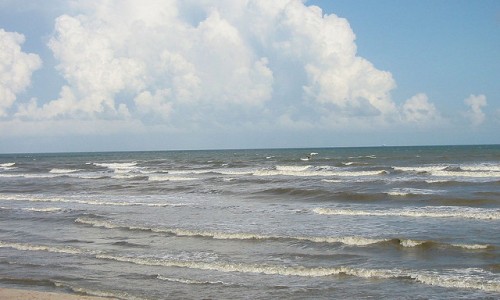
Second, it seemed unreal that such a place existed, when my primary reference for the beach was the Gulf of Mexico, whose water is more of a brackish brown than a tourmaline blue thanks to the mud churned into it by the Mississippi River.
The Gulf of Mexico.  From www.weathertemperature.net.
So you can imagine my shock when I went to Okinawa for a few days, and it looked like this:
Zamami, Okinawa
A LITTLE BIT OF CONTEXT

Okinawa is dramatically different from the rest of Japan.  The islands lack the four distinct seasons that are so highly prized by the Japanese.  Since the territory lies at the same latitude as northern Myanmar, the weather vacillates between hot, hotter and hottest.  The people in Okinawa are laid-back in a manner characteristic of cultures that live in hot climates.  We saw scads of men with long hair, and men and women with prominently displayed tattoos.  We also observed a fairly interesting trend in which all the businessmen were attired in dress slacks and Hawaiian shirts, a colorful diversion from the black trousers-white dress shirt uniform in mainland Japan.

Okinawa also possesses a unique history among the prefectures of Japan.  The Meiji government assumed control of the islands in 1879, designating them a Japanese colony.  Much of the Ryukyu culture indigenous to the islands was systematically suppressed; however, some of the aesthetics (architecture, art, etc.) remain.  There are several movements concerned with the preservation of Ryukyu culture, which some feel is perilously close to dying out.

During WWII, the islands were the site of the bloodiest conflict in the Pacific Theater.  Over 200,000 people (soldiers and civilians) died in the Battle of Okinawa.  In case of an invasion by the Allies, civilians had been trained by the Japanese military to commit suicide rather than be apprehended by enemy soldiers.  The Okinawans were considered to have too much valuable information about the Japanese military, and were therefore liabilities if they were captured or questioned.  

On July 4, Paul and I briefly visited the Peace Memorial Park for the Battle of Okinawa, which was extensive and beautiful.  Both of my grandfathers were in Okinawa during WWII; one of them served in the U.S. Navy on a ship stationed offshore.  As we walked around, I tried to imagine what it must have been like for these young soldiers, most of whom had never left their hometowns, to be stationed someplace so exotic yet dangerous.  My grandfather told my dad that while he was in Okinawa, a typhoon hit the flotilla, sinking a number of ships.  For a man from the landlocked state of Kansas, he must have felt really far from home.
Names of the dead, Peace Memorial Park.
Today, Okinawa hosts a number of U.S. military bases*, straining relations between Okinawa and the U.S., as well as Okinawa and mainland Japan.  There have been numerous reports over the years of military personnel being disruptive, damaging property, and even sexually assaulting local women.  Okinawans want the bases to be moved elsewhere, but the national government keeps dragging its feet.  The level of frustration has risen to a point where some Okinawans are advocating secession from Japan.  

BUT SERIOUSLY, OKINAWA IS AWESOME

Paul and I agreed that it was fortunate that we discovered Okinawa right as we were about to leave Japan, otherwise we would have spent every holiday there and ignored the rest of the country in favor of early morning swims, sunsets, and some of the most incredible stars I've ever seen.  
Our favorite beach for morning/evening swims.
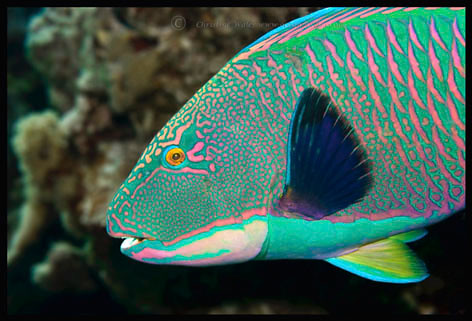
We tried scuba diving for the first time, off the coast of one of the uninhabited islands near Zamami.  I'm not sure what I expected; the closest I'd come to scuba diving was snorkeling in the Galapagos Islands, and though that part of the Pacific is beautiful and filled with an abundance of marine creatures, the visibility is nothing compared to Okinawa.  We could see for what seemed like miles, and the fish were unlike anything I'd ever seen.  Magenta, aqua blue, bright yellow, red, spotted, striped, electric blue, orange, hot purple, and more- I didn't realize that colors like that existed outside of the 1980s.  
Parrotfish. From www.flickr.com.
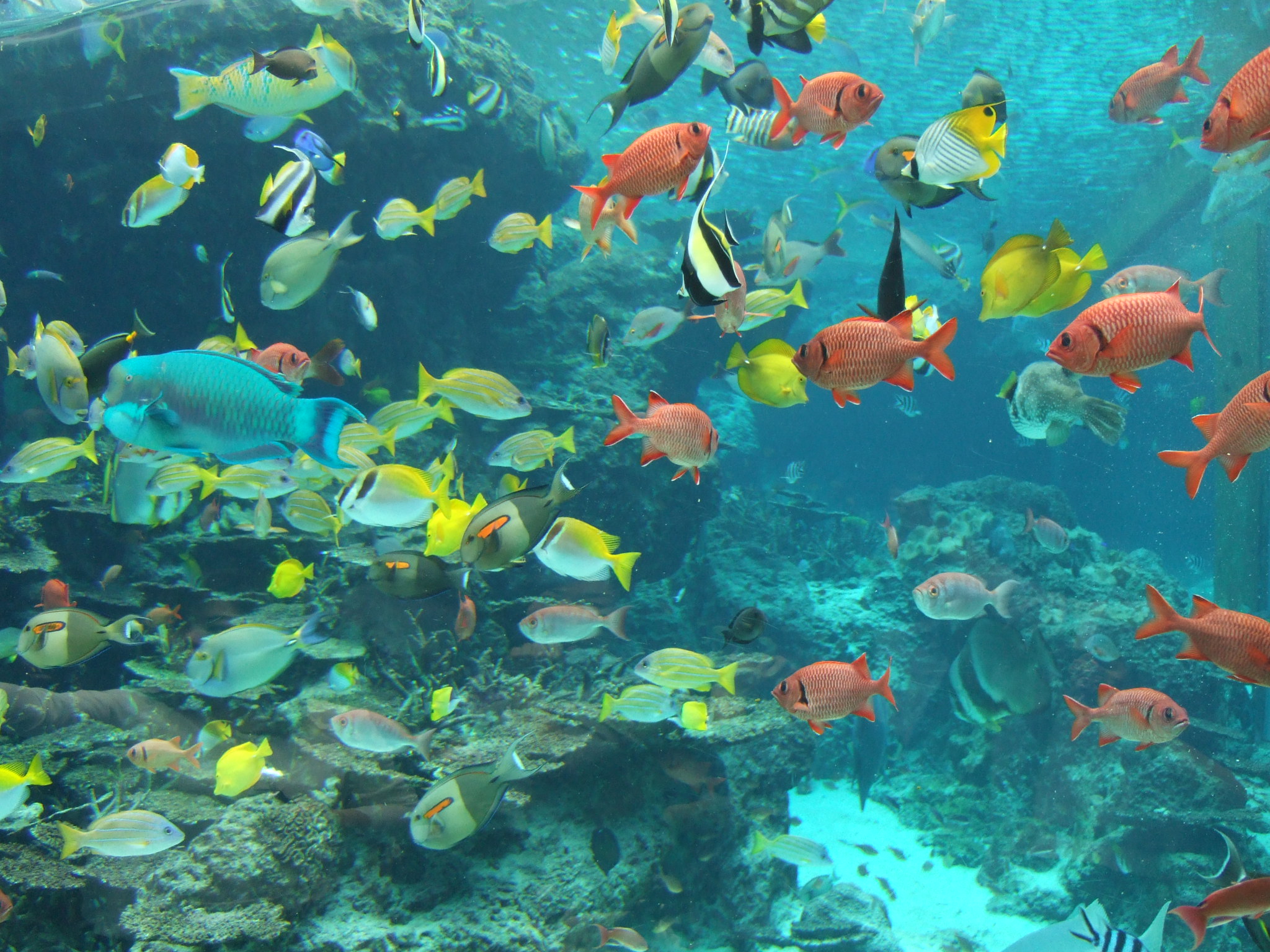
We glided along reefs, occasionally coming face-to-face with a blowfish or a sea snake, or watch clown fish dart back into anemones.  Mostly, however, the fish didn't seem perturbed by us, and would swim closer to examine the strange black-clad creatures swimming past.  The only thing I can liken it to was being in the best aquarium imaginable...but a billion times better.  
Though this is probably an aquarium, it's not unlike what we saw while diving.  From commons.wikimedia.org
The dive itself was short- only thirty minutes- but our guide was really kind and offered to loan us the masks and flippers for the day in case we wanted to go snorkeling later.  We did, and we ended up finding a huge reef that we spent over an hour paddling around, watching the kaleidoscope of fish pass by.  I'd be studying a certain area, and then look away for a moment, and when I'd look back again a second later, the reef would have changed completely.  The coral was still there, and the anemones, but the creatures surrounding me would be entirely different.  Often I'd suddenly realize that schools of fish were swimming around me, causing the water to shimmer even more with their bright scales.

Leaving Okinawa was a wrench.  The scuba diving alone was one of the top 5 experiences of my life.  However, it's all the more incentive to return to Japan.  Next time, though, I may never leave.  
Near Ama Island

*There's also a surprisingly large Japanese military population in Okinawa.  When we landed in Naha, more than half of the tarmac was filled with planes featuring the hinomaru (the Japanese flag).

Wednesday, July 24, 2013

THE LAST WORDS

As many of you who read this blog know, I love my students.  What's more, I love the outrageous things they communicate through speech or writing.  Now that classes are over, here are the last gems from my time teaching.  Here's hoping they keep in touch via email and send me fresh material- I'll really miss these great perspectives. 

----

Grading first year papers, I've noticed a disturbing trend wherein they all write about themselves in third person. But not in an acceptable way like, "Elizabeth writes a Facebook post." Instead they use the pronoun "it." As in, "It puts the lotion in the basket."
-----

Second years have to write a presentation detailing 3 things you can do with a certain object. The paper team wrote: "Secondly, you can clean a dirty butt. This paper is very important to me in my life."
------

First years had to write draft presentations, which I am now correcting. The recurring themes are hobbies, pets, and club activities. These stood out:

1. One kid wrote an entire presentation on Germany and the Berlin Wall, and killed it.
2. Another wrote about a trip to Hawaii she and her mother took last summer, just to see EXILE (a famous pop band). Very nonchalantly she wrote, "After the picture, we ate dinner with them."
3. "My dog is woman. She is not marrying."
4. "Hello, everyone. I'd like to talk about my abacus because I like it."

Then this happened: "I like western movies. I think that the best movie is The Karate Kid."

-----

A couple of my kids came up and squeezed my arms. One of them said, "Mm! Marshmallow."

Guess it's time to hit the gym and officially reclaim my Michelle Obama guns.

-----

Some miscellaneous observations:

Next, Sandeul [a Korean pop star] has a beautiful voice.  He resembles a duck.

I want to tell you about Takatori Junior High School.  There are many insects.

The music makes a woman having a long hair a concept.  I intended to grow hair to listen to the music.

Q: If you could have dinner with anyone living or dead, who would it be? What would you talk about?

A:
"It is a poisoned dinner."
"I chose living.  I think that it is a fish."

Monday, July 22, 2013

JAPAN IS STRANGE. SOMETIMES. A LOT OF THE TIME.

When you are on the outside of a culture looking in, there are often things you find strange.  Not in a "How peculiar, you drive on a different side of the road" kind of way, or even in a "I don't get that joke" way.  There are simply fundamental differences in what some people consider comprehensible, compared to the rest of the world.  Below are a few Japanese examples of this discrepancy.  They are by no means an exhaustive representation of everything that is out there.  However, they all made me shake my head and say, "What?"

Kikkoman Soy Sauce Ad

The Diarrhea Song- lots of great gestures, as well as some perplexing subtitles. 

Scary Japanese "mannequins." 

This video I call "Nice Peace." There are many things I appreciate about this video: the costumes, the lyricality of the music, the unwitting offense that is given when this guy starts giving the two-fingered salute instead of the peace sign.  The song is fairly catchy, too.  

Standing outside an Osaka subway station last year, I watched as a man in blue coveralls walked by with this cat on his shoulder.  My friend and I were in the middle of having a coffee, which we hurriedly abandoned to follow this feline Pied Piper and find out what was going on.  The man placed the cat on this pole so that people could take photos, and then walked off again.  I like to think of this cat as a more dapper Grumpy Cat.

In another example of cat power, behold, Sir Tama.  Sir Tama is the super station master of Kishi Station in the neighboring prefecture, Wakayama.  Sir Tama (who is actually a lady) is regularly trotted out in ceremonial garb for special occasions.  Many of the stores in Wakayama feature Sir Tama memorabilia, and she has brought in over a billion yen in merchandise and tourism. According to Wikipedia, Sir Tama "is 'the only female in a managerial position' in the [rail] company" that owns the line on which Kishi Station is located. 

This man in Tokyo can sing any national anthem you can name.  We should have told him we were from Norway; instead, he serenaded us with The Star-Spangled Banner.  No clue how the tiger heads fit in to his shtick.